Ceramic eco-additive from waste significantly boosts concrete strength
Alexey Matveev, Director of LLC “CeramEco” and junior researcher at the Laboratory of Technological Combustion at TSC SB RAS, has developed an affordable eco-friendly ceramic additive derived from waste feedstocks – aluminum oxide, iron silicide, and a triple compound of silicon, carbon, and nitrogen through exothermic reactions. The additive, made from end-of-life plastic, glass, aluminum, and slag materials, can be introduced into concrete at just 0.4% by mass, enabling a 25–50% increase in strength and a threefold slowing-down in degradation caused by freeze-thaw cycles. The project received financial backing of five million rubles from The Innovation Assistance Fund (FASIE) under the “Start” program.
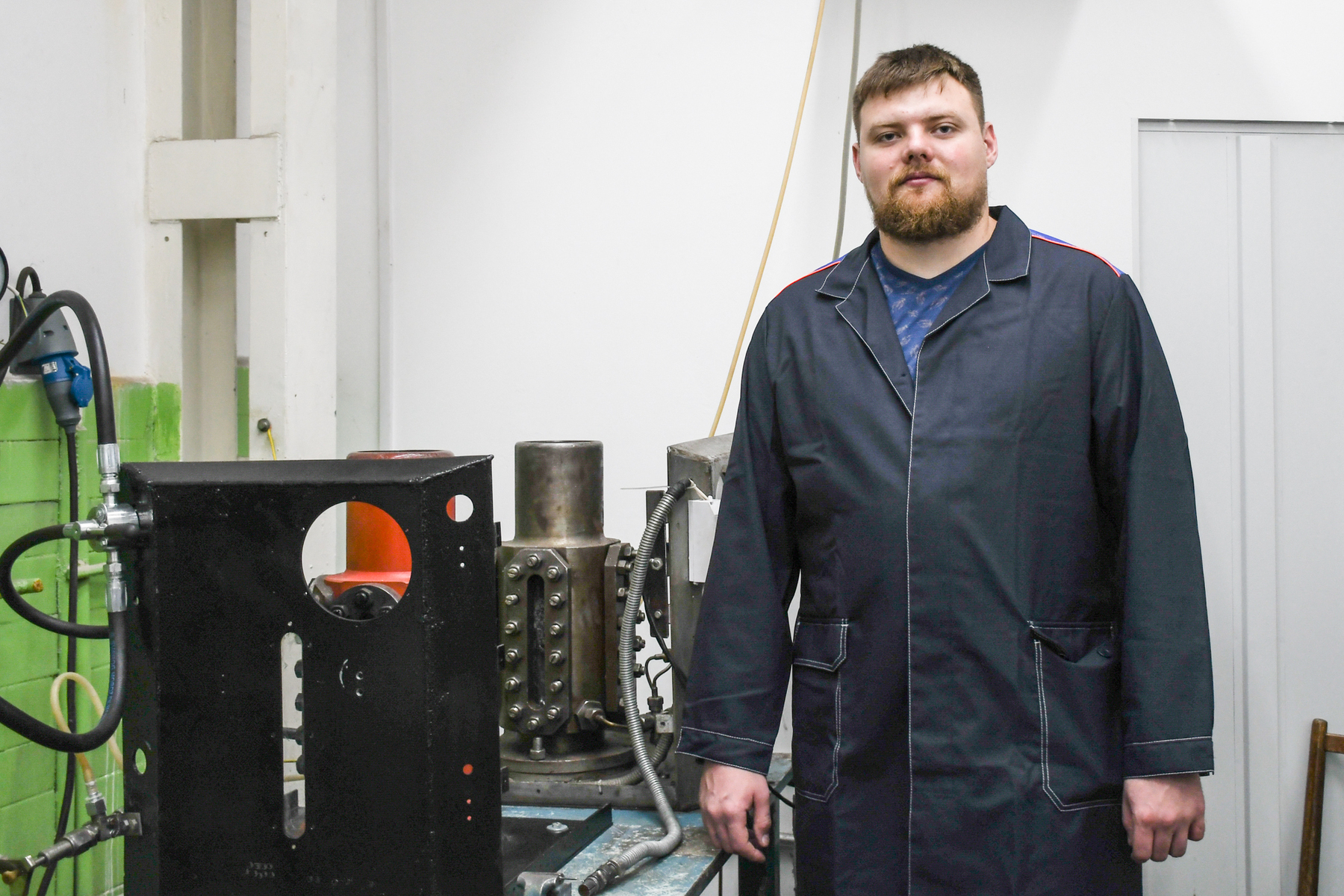
– Unlike conventional waste recycling, which reuses materials within existing production cycles, our technology aims for complete irreversible transformation of waste into a “green” product that is in demand on the construction materials market. I came across a research paper from which I learned that adding a pinch of aluminum oxide can significantly enhance concrete properties, but this powder is not cheap. That’s why I felt compelled to step in and propose an affordable additive. Our additive is three to six times cheaper than similar materials on the market and relies solely on readily available waste, without the need for expensive inputs, – explained project head Alexey Matveev.
The process involves crushing raw waste ingredients to specified sizes: aluminum waste (cans, foil) to particles of 0.5-1 mm, slightly larger glass and slag particles, and plastic fragments (polystyrene), taking up around one fourth of the total volume, are crushed to 3-5 mm pieces. Then the mixture is homogenized in a ball mill for several hours. After that, it is subjected to an exothermic reaction in a reactor–no external heat required–where a small incandescent filament sets off the reaction, resulting in a ceramic additive with aluminum oxide, iron silicide, and a triple compound of silicon, carbon, and nitrogen on board. Aluminum oxide particles accelerate the setting and hardening of concrete, while phases of iron silicide and silicon-carbon-nitrogen compounds further reinforce the material. During the reaction, a significant amount of hydrogen-rich gas (up to 60%) is released, which can potentially be utilized as an eco-friendly fuel for energy generation.
Alexey clarified that the new eco-additive improves concrete through two primary mechanisms:
Small ceramic particles find their way deep into the pores, making concrete more dense and creating additional protection against water and aggressive environments. The particles also serve as crystallization centers for forming small cement grains: the finer the grain, the higher the material’s strength, since small grains ensure better bonding between concrete components.
The scientist believes that the role of green technologies–enabling full waste recycling without additional resource input–will grow each year, aligning with national priorities for environmental sustainability (“Environmental Well-being 2025-2030” initiative).
The project has already drawn attention from Russian construction materials manufacturers and the Russian-Qatari Business Council (RQBC), with plans to bring a tested, market-ready product to industry by next year. Potential partners from Gulf countries are in need of eco-friendly materials and technologies that would fit in with the local climate.
All work under the R&D contract will be conducted in collaboration with specialists at Tomsk Scientific Center with their expertise and a long history of research into exothermic reactions and their practical applications.
The project is supported by the Foundation for Assistance to Small Innovative Enterprises within the framework of the “Start” program, under contract No. 5406GS1/112072 dated November 26, 2025.
© TSC SB RAS Press Service

